Documenting North America's past & present covered bridges


Home

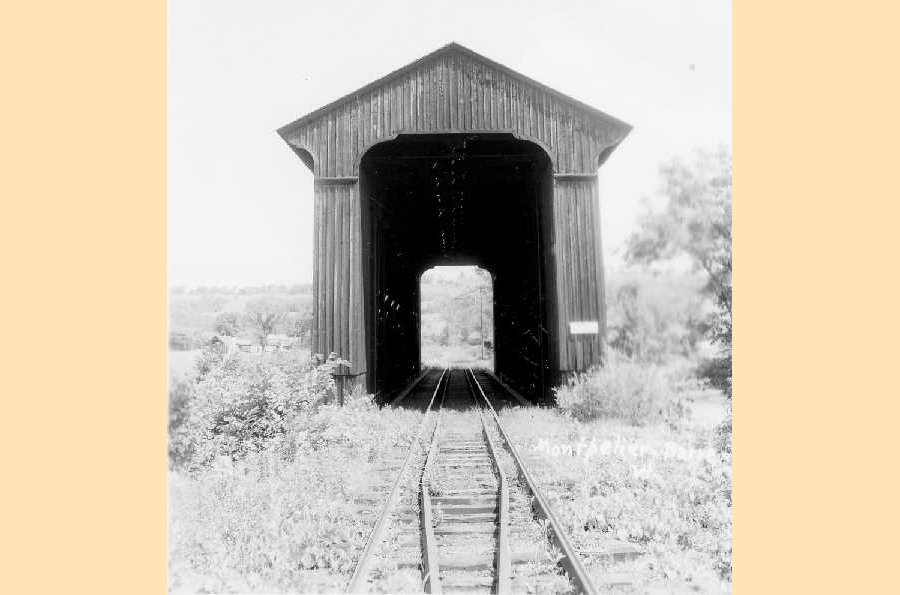
Pinsley or Montpelier and Wells River Railroad, Washington County

If you find errors in the data please contact Bill Caswell.

If you would like to provide information on covered bridges that no longer exist from your state, or adopt a state to work on, we would certainly welcome your assistance. Please contact Trish Kane for more information.

Inventory Number: VT/45-12-16x
County: Washington County
Township: Berlin - Montpelier
Town/Village:
Bridge Name: Pinsley or Montpelier and Wells River Railroad
Crosses: Winooski River
Truss type: Howe
Spans: 1
Length: 100'
Roadway Width:
Built: 1904
Builder:
When Lost: 1964
Cause: Moved
Latitude: N44 14.407
Longitude: W072 32.924
See a map of the area
Topographic map of the area
Directions: Barre & Chelsea Railroad east of Montpelier.

Pinsley Bridge, Montpelier, Washington County, VT Built 1904 Lost 1960
Richard E. Roy Collection
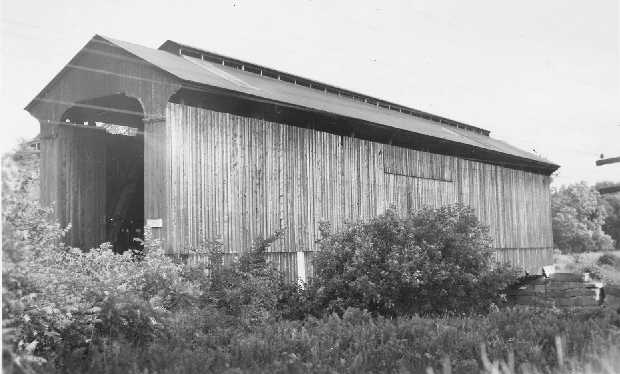

Pinsley Bridge, Montpelier, Washington County, VT Built 1904 Lost 1960
Richard E. Roy Collection
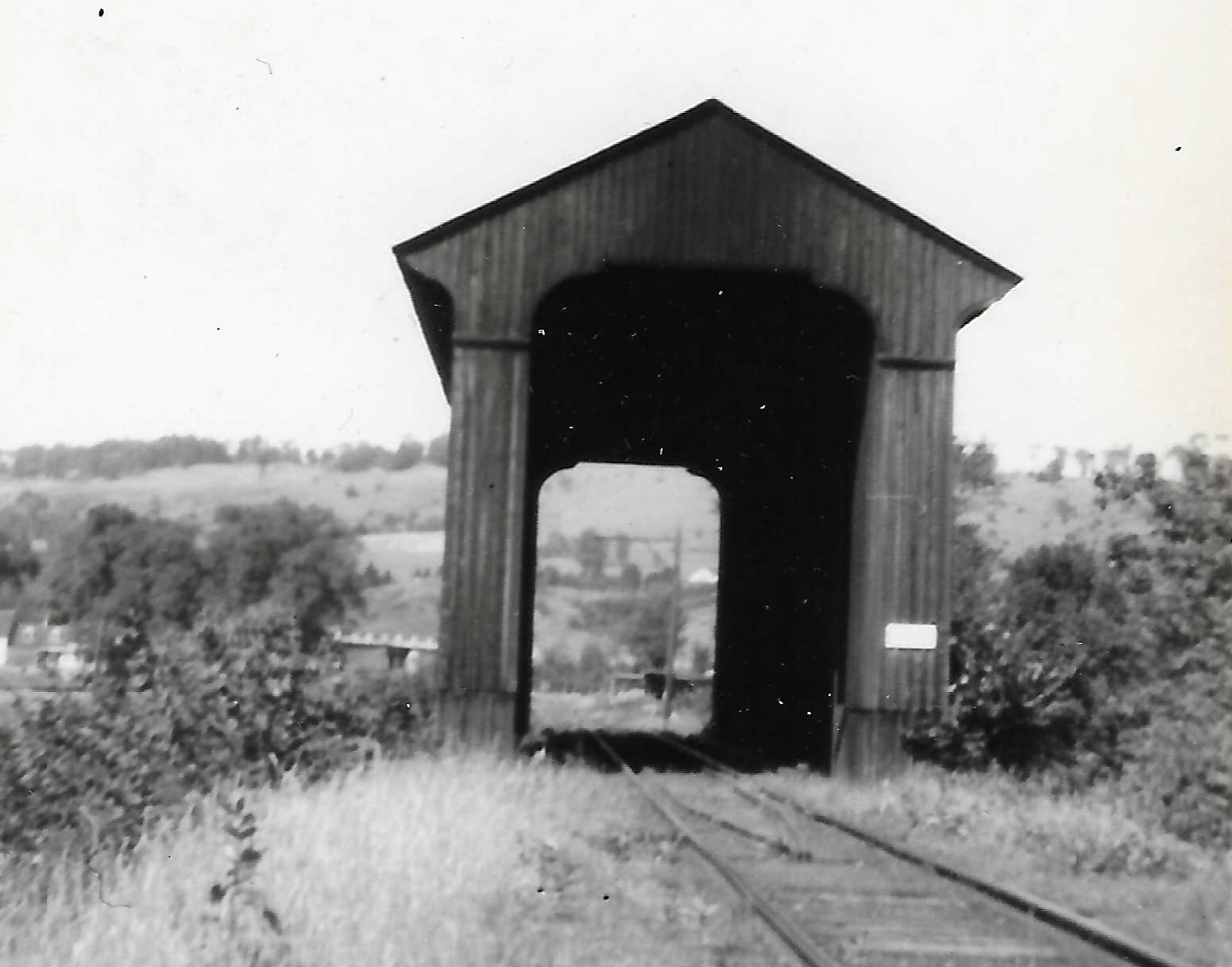

Pinsley Bridge, Montpelier, Washington County, VT Built 1904 Lost 1960
Margaret Foster Collection, NSPCB Archives

Comments:
Built by the Montpelier and Wells River Railroad on the Barre Branch, which later became the Barre & Chelsea, and then Montpelier & Barre. The M&WR RR/Barre Branch predates the reported 1904 build date for the covered bridge, so an earlier build date is likely for the crossing and it was probably a covered bridge from initial build date forward. However, newspaper references from the 1909 fire of the adjacent CV RR bridge indicate that the M&WR RR bridge was considered newer and being only about 6 years old at that point. Per The Burlington Free Press and Times, September 22, 1898, "MONTPELIER. The Tabor bridge on the Wells River road was raised 18 inches Sunday." Per The Burlington Free Press, January 13, 1904, "A horse owned by Daniel Webster of East Montpelier became frightened early yesterday morning, escaped from its owner and ran into the covered Montpeller & Wells River railroad bridge near Tabor's crossing, breaking one leg and necessitating killing the animal." References to Tabor Crossing could either refer to the bridges near the gun club or between Barre Transfer and Montpelier, so the reference is unclear. Per the New and Advertiser (Northfield), September 14, 1909, "The Central Vermont trains on the Barre branch have been run between this city [Barre] and Montpelier over the Montpelier & Wells River railroad track because of the loss of the covered wooden bridge near the Montpelier Gun club's range Wednesday afternoon [September 8, 1909]. The old bridge burned rapidly and within an hour after the fire had broken out the skeleton of the structure had dropped into the bed of the river while the sectionmen and volunteers had hard work saving the Montpelier & Wells River bridge which is nearby." An article from September 8th indicated that some boards of the bridge had caught fire and were pulled off to save the structure as a whole. Per The St. Johnsbury Caledonian, September 15, 1909, "The covered Central Vermont railway bridge near Barre Transfer was burned Wednesday and fell into the river. The fire is supposed to have caught from a passing locomotive. The Montpelier & Wells river alongside, which crosses the river at that point, was badly scorched and was on fire several times, but was saved by section men and others." In 1956, the line ceased operation, but quickly was acquired by Samuel Pinsley, who also bought the Barre Branch of the Central Vermont railroad in 1957. The segment with the covered bridge was abandoned. The bridge went out of use in 1960 and was sold to Paul B. Dutton around 1963 who, in turn, sold it to Ed and Murray Clark to become part of the White Mountain Central Railroad and railroad collection owned by the two. The Clark brothers dismantled the bridge beginning in January 1964, transported it to North Woodstock, NH, and reconstructed it at Clark's Trading Post, a tourist attraction established by their parents. The bridge is now designated by NSPCB as NH-05-14. There are 24 panels in the roof vent, distinguishing it visually from other similar structures from the railroad era of covered bridges.
Sources:
The St. Johnsbury Caledonian, September 15, 1909.
New and Advertiser (Northfield), September 14, 1909.
The Burlington Free Press and Times, September 22, 1898.
The Burlington Free Press, January 13, 1904.
National Society For the Preservation of Covered Bridges. Covered Bridge Topics, Volume XXXIX, No. 3, Summer 1981, page 14.
Conwill, Joseph D.. Images of America - Vermont Covered Bridges, 2004, page 89

Compilation © 2024 Covered Spans of Yesteryear

The images in this collection may be protected under copyright law and may only be used for educational, teaching, and research purposes.
If the intended use is beyond these purposes, it is the responsibility of the user to obtain the appropriate permissions from the owner stated in the image's credits.


Home | Copyright Notice | Reports | Credits | Unidentified Bridges | FAQ | Links

www.lostbridges.org